
From Digital Files to Family Heirlooms: What to Do with Your Newborn Photos

Quick Answer
To turn your newborn photos into family heirlooms, print high-quality copies, create personalized photo albums or scrapbooks, and consider framing select images for display. Additionally, back up digital files on multiple devices or cloud storage to preserve these precious memories for generations.
As a maternity and newborn photographer here in Morgan City, I know how precious those first moments with your little one truly are. Capturing those tiny fingers and sleepy smiles is just the beginning of a beautiful journey. In this post, I want to share some heartfelt ideas on how to transform your digital newborn photos into cherished family heirlooms that will be treasured for generations.
Why is it important to turn newborn digital photos into physical family heirlooms?
Turning your newborn digital photos into physical family heirlooms ensures these precious memories become tangible and lasting. While digital files can be easily stored, printed photos and albums create emotional connections that can be shared and passed down through generations.
In my 15 years as a newborn photographer serving Morgan City, New Orleans, Baton Rouge, Lafayette, and the wider South Louisiana area, I’ve seen how printed images displayed in homes become treasured keepsakes. Unlike photos hidden on phones or computers, physical prints invite daily interaction and storytelling, connecting family members across time and reminding everyone of the joy that surrounded your newborn’s arrival.
How do I choose the best newborn photo to turn into wall art?
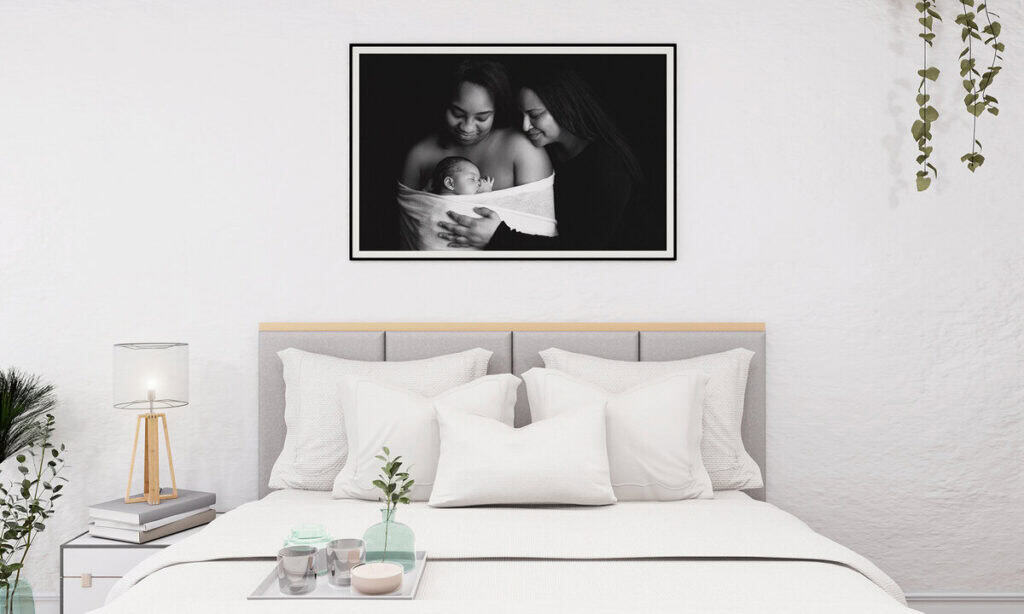
The best newborn photo for wall art is one that captures your baby’s unique personality or a meaningful family moment. This image becomes a focal point in your home and a celebration of this special time in your life.
When families visit my Morgan City studio for their newborn photo reveal, I encourage them to select a “hero image” first. It might not be the technically perfect shot, but often it’s the photo that makes your heart pause – a tiny smile, a peaceful expression, or a tender connection with family. Trusting your intuition helps you pick the photo that will shine as a centerpiece in your home décor.
What is the best way to create a newborn photo gallery wall in my home?
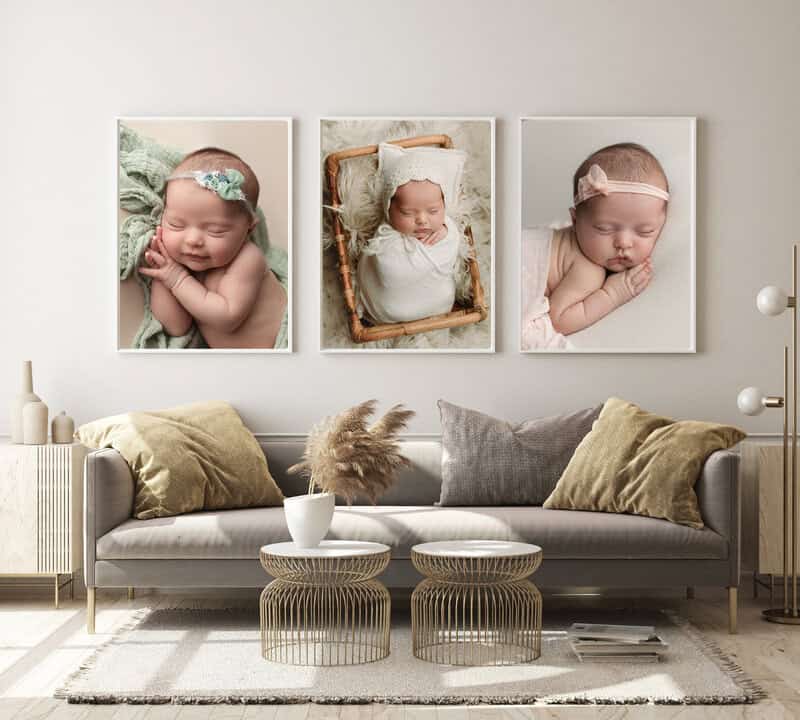
A gallery wall allows you to showcase multiple newborn images together, telling the full story of your baby’s arrival and early days. It’s a warm and personal way to display milestones, family portraits, and delicate details like tiny fingers and toes.
In South Louisiana homes, gallery walls are especially popular for adding personality without overwhelming a space. I recommend starting with your hero image and surrounding it with three to five complementary photos in matching frames or canvases. Keeping a consistent color palette or theme makes the display feel intentional. You can arrange the photos in a structured grid for a modern look or opt for a relaxed, salon-style layout depending on your style.
One meaningful idea is to create a growing gallery wall that evolves over your baby’s first year – from maternity photos to newborn portraits, milestone sessions, and birthday celebrations. This timeline becomes a treasured focal point in your home, capturing your family’s journey.
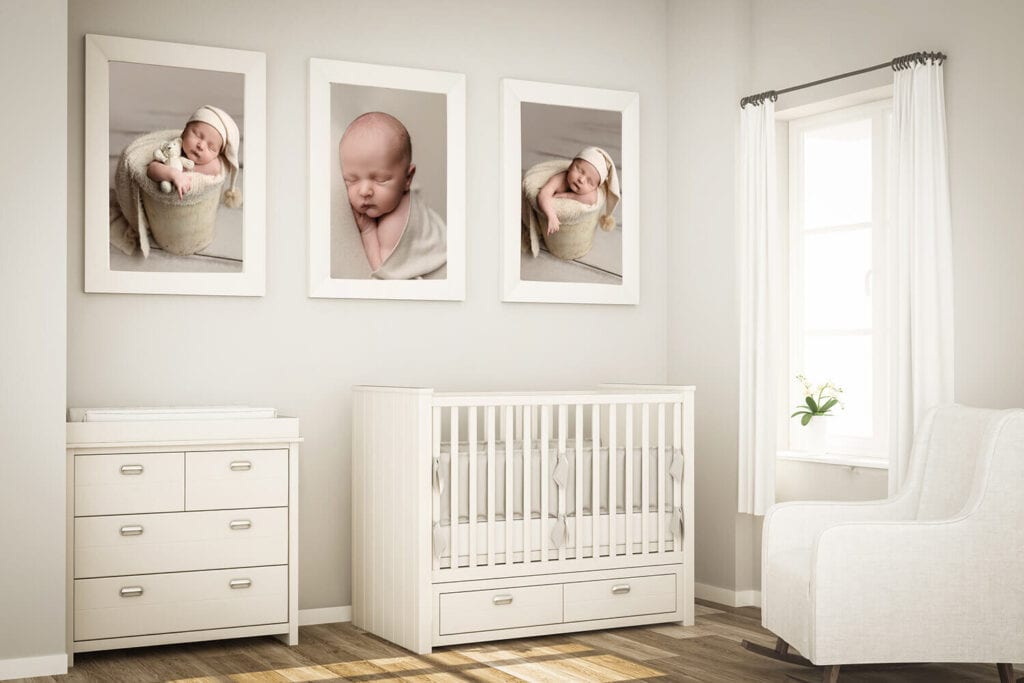
How can I design a newborn photo album that becomes a family treasure?
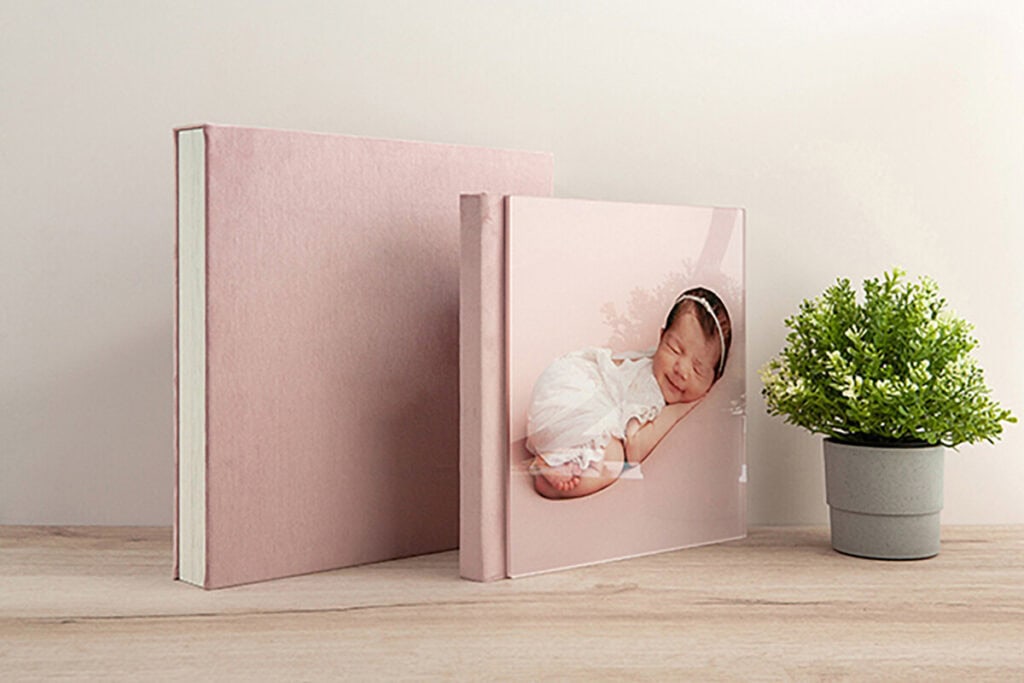
A custom newborn album preserves your entire session in a beautifully crafted keepsake that invites you to relive those moments again and again. Unlike wall art, albums tell the full story with a variety of images and thoughtful layouts.
I design albums with lay-flat pages and archival-quality printing, ensuring they will last for generations. These albums mix full-page portraits, detailed close-ups of your baby’s features, and candid family moments. The sequence of images creates a narrative flow that draws you into the experience.
Albums also make meaningful gifts for grandparents and extended family. Many of my clients order duplicate albums so both sides of the family can share in these treasured memories.
What are creative ways to display newborn photos around my home besides wall art and albums?
Smaller framed prints are perfect for shelves, mantles, nightstands, and desks, allowing you to keep your baby’s sweet face close throughout your daily routine. These intimate displays bring comfort and joy in various living spaces.
For instance, an 8×10 or 11×14 print on a bedside table means you’ll see your newborn first thing in the morning and last thing at night. Desk frames in a home office provide a comforting reminder of family during busy workdays. In South Louisiana homes with multiple children, creating individual photo displays for each child helps everyone feel equally celebrated and represented.
How should I preserve and back up my digital newborn photo files safely?
Preserving your digital newborn photo files is essential to protect these memories for the future. I recommend a three-part backup system: one copy on an external hard drive, one in cloud storage services like Google Photos or iCloud, and one on a USB drive stored separately from your home.
This strategy guards against technology failures, accidental loss, and natural disasters common in South Louisiana, such as hurricanes and floods. Organizing files with clear names and dates – for example, “2024_March_Newborn_BabyLiam” – makes it easy to find photos years later. While digital backups are important, transforming your images into printed art is what truly preserves your family’s story for generations.

Why is investing in professional prints and albums worth it for newborn photos?
Investing in professional prints and albums means acquiring heirlooms that will outlast fleeting trends and technology changes. These products become family treasures passed down through generations, telling your child’s story long after today’s moments have passed.
Compared to everyday purchases that lose value over time, newborn photos grow in emotional significance. Families from Lafayette, Baton Rouge, New Orleans, and Morgan City often tell me years later they wish they had ordered more prints or a larger album. The joy these images bring is priceless and enduring.
How can I start displaying my newborn photos if I feel overwhelmed by choices?
If you feel overwhelmed, begin simply by choosing one image that moves you and ordering a large framed print or canvas. Hang it somewhere you’ll see daily, such as the living room or hallway. This first step makes your memories visible and real.
From there, you can gradually add an album or smaller prints for family members. My full-service approach at my Morgan City studio is designed to make this process easy and stress-free for families across South Louisiana. I handle everything from photographing your baby to helping you create a display plan that fits your home and style.
Your newborn photos are more than pictures – they are your family’s legacy. Together, we can make sure they become the heirlooms they deserve to be.
Frequently Asked Questions
What is the difference between canvas prints and framed prints for newborn photos?
Canvas prints have a modern, gallery-wrapped look with the image extending around the edges and require no additional framing or glass. They suit casual, contemporary spaces well and make great large statement pieces. Framed prints offer a traditional, polished appearance with matting and glass protection, allowing customization through frame styles. Both types are archival quality and designed to last for generations. I often recommend canvas for larger pieces and framed prints for smaller or more formal areas in your home.
When is the best time to order prints after my newborn session?
I suggest ordering prints and wall art within two to three weeks after your reveal session while the emotions are fresh and you clearly remember your favorite images. However, it’s never too late to order since I keep all client files permanently. Families who order sooner tend to enjoy their photos more immediately rather than delaying the experience.
Can I print my digital newborn photos at a local print shop?
While it is possible, I advise against printing at consumer print shops. Professional photography files are color-calibrated for specialized labs using archival materials and precise color management. Consumer services often produce prints with darker tones, color shifts – especially in skin tones – and papers that fade quickly. The quality difference is significant. Ordering through me guarantees museum-quality prints that look perfect and last a lifetime.
What size wall art is best for a standard living room?
For a focal point above a sofa or in a main living space, I recommend prints or canvases at least 20×30 or 24×36 inches. These sizes provide strong visual impact without overwhelming the room. Smaller sizes like 11×14 or 16×20 often look lost on large walls. When in doubt, going bigger is better – clients rarely regret choosing a larger size but often wish they had.
Should I display newborn photos in the nursery or common areas?
Both options work well. The nursery is a natural, personal space for newborn photos, creating a cozy environment for your baby. However, displaying favorite images in common areas like the living room, hallway, or dining room ensures they’re seen regularly and become part of your family’s shared story. A good approach is placing your hero piece in a main living area and additional photos in the nursery.
If you are ready to book your session or have questions, I would love to hear from you. I serve families across Morgan City, New Orleans, Baton Rouge, Lafayette, and all of South Louisiana. Contact me today to check availability and reserve your date – I only take a limited number of sessions each month.
{
“@context”: “https://schema.org”,
“@type”: “FAQPage”,
“mainEntity”: [
{
“@type”: “Question”,
“name”: “What is the difference between canvas prints and framed prints for newborn photos?”,
“acceptedAnswer”: {
“@type”: “Answer”,
“text”: “Canvas prints have a modern, gallery-wrapped look with the image extending around the edges and require no additional framing or glass. They suit casual, contemporary spaces well and make great large statement pieces. Framed prints offer a traditional, polished appearance with matting and glass protection, allowing customization through frame styles. Both types are archival quality and designed to last for generations. I often recommend canvas for larger pieces and framed prints for smaller or more formal areas in your home.”
}
},
{
“@type”: “Question”,
“name”: “When is the best time to order prints after my newborn session?”,
“acceptedAnswer”: {
“@type”: “Answer”,
“text”: “I suggest ordering prints and wall art within two to three weeks after your reveal session while the emotions are fresh and you clearly remember your favorite images. However, it\u2019s never too late to order since I keep all client files permanently. Families who order sooner tend to enjoy their photos more immediately rather than delaying the experience.”
}
},
{
“@type”: “Question”,
“name”: “Can I print my digital newborn photos at a local print shop?”,
“acceptedAnswer”: {
“@type”: “Answer”,
“text”: “While it is possible, I advise against printing at consumer print shops. Professional photography files are color-calibrated for specialized labs using archival materials and precise color management. Consumer services often produce prints with darker tones, color shifts – especially in skin tones – and papers that fade quickly. The quality difference is significant. Ordering through me guarantees museum-quality prints that look perfect and last a lifetime.”
}
},
{
“@type”: “Question”,
“name”: “What size wall art is best for a standard living room?”,
“acceptedAnswer”: {
“@type”: “Answer”,
“text”: “For a focal point above a sofa or in a main living space, I recommend prints or canvases at least 20×30 or 24×36 inches. These sizes provide strong visual impact without overwhelming the room. Smaller sizes like 11×14 or 16×20 often look lost on large walls. When in doubt, going bigger is better – clients rarely regret choosing a larger size but often wish they had.”
}
},
{
“@type”: “Question”,
“name”: “Should I display newborn photos in the nursery or common areas?”,
“acceptedAnswer”: {
“@type”: “Answer”,
“text”: “Both options work well. The nursery is a natural, personal space for newborn photos, creating a cozy environment for your baby. However, displaying favorite images in common areas like the living room, hallway, or dining room ensures they\u2019re seen regularly and become part of your family\u2019s shared story. A good approach is placing your hero piece in a main living area and additional photos in the nursery.”
}
}
]
}